Mail In Airbag Module Reset: The Cheaper, Smarter Fix After an Accident
If your car has been in a collision and the airbag light will not turn off no matter how many parts get replaced, the problem is almost always inside the SRS module itself. Instead of paying the dealer for a brand new unit and programming, a Mail In Airbag Module Reset lets you ship your original module to a specialist, have the crash data cleared, and get it back ready to plug in. This guide walks through how the process works, what to expect, and how to avoid the mistakes people commonly make along the way.
A lot of drivers have never heard of this option. Body shops do not always mention it, and dealers rarely do, because selling a new module is simpler for them. But for most vehicles on the road today, resetting the original module is a well-established repair that restores the airbag system to factory condition, keeps your original VIN programming, and costs a small fraction of a replacement.
What the airbag module actually does
Every modern vehicle has an airbag control module, also called the SRS module, ACU, or restraints control module depending on the manufacturer. It is a small computer, usually mounted under the center console or beneath one of the front seats, that continuously monitors impact sensors, seat occupancy sensors, and seatbelt buckles. When it detects a serious enough collision, it fires the airbags and seatbelt pretensioners in milliseconds.
After a crash, the module also does something most people do not know about: it records the event. It writes crash data into protected memory and sets hard codes that a normal scan tool cannot erase. Once that happens, the module considers itself used. The airbag light stays on permanently, and the system may not deploy correctly in a future accident until the module is reset or replaced.
Safety first: A lit airbag light means your restraint system may not protect you. Never cover it up with a resistor bypass, a disconnected bulb, or a cheap code-clearing gadget. Those hide the warning without restoring the system.
The warning light that keeps coming back
This is the symptom almost everyone notices first. A shop clears the codes, the light goes off for a moment, and then it returns on the next key cycle.
When that happens after an accident, it is a strong sign the module is holding crash data. Replacing more sensors will not help until the module itself is cleared.
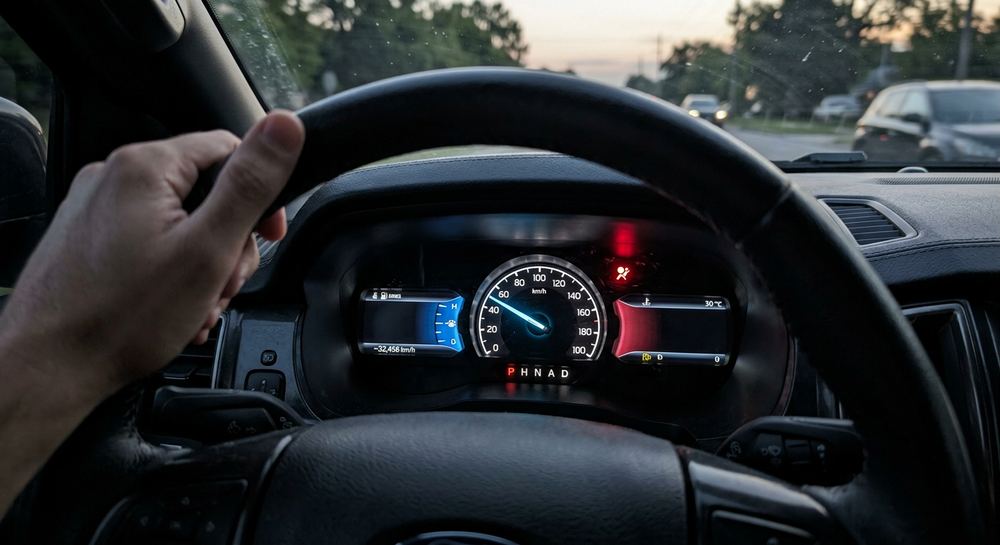
Why the light stays on after collision repairs
It is easy to assume that once the damaged airbags and panels are replaced, the warning light will clear itself. On most vehicles it does not. These are the usual reasons:
- Crash data is locked in the module. This is by far the most common cause. New airbags and belts do nothing while the module still holds the crash record.
- A pretensioner was missed. Every pyrotechnic part that fired must be replaced, including seatbelt pretensioners that are easy to overlook.
- An impact sensor is damaged. Front and side sensors often take a hit in the same collision.
- Connector or clockspring faults. Loose under-seat plugs or a worn clockspring can also trigger the light.
A proper scan will tell you which of these you are dealing with. If the report shows crash data or a stored deployment event, the module needs attention before anything else.
How a mail in airbag module reset works
The idea is simple. Instead of throwing your module away, you remove it from the vehicle, ship it to a reset specialist, and they clear the crash data directly from the module's memory using dedicated equipment. The module is then tested and shipped back to you. Because it is your original unit, it keeps its VIN coding and configuration, so in most cases it is plug and play.
- Confirm the problem. Get a scan showing crash data or a hard code stored in the module.
- Place the order. Most services ask for the year, make, model, and the part number printed on the module label.
- Remove the module. Disconnect the battery, wait, then unbolt and unplug the unit.
- Ship it. Pack it securely with your order details and contact information.
- Reset and testing. The specialist clears crash data, fault codes, and checks the unit.
- Reinstall. Bolt it back in, reconnect, and confirm the light goes off after any remaining faulty parts are replaced.
What you will actually be shipping
The airbag module is usually a compact metal or plastic box with one or two large connectors and a label showing the part number. It is light, small, and easy to ship.
Take a clear photo of the label before you pack it. That part number is what the reset service uses to match your module to the correct data and procedure.
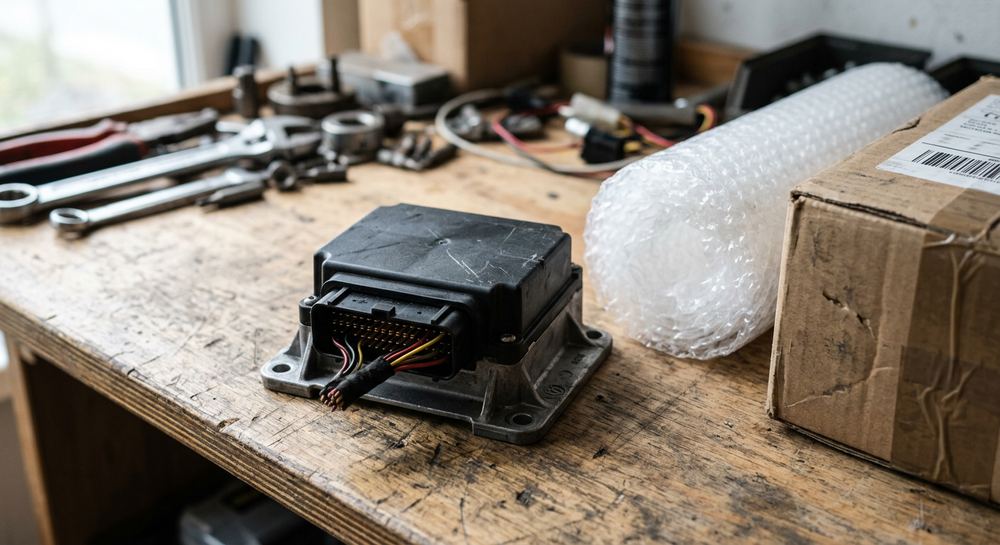
Reset vs. replacement: what it costs
Price is the main reason people choose a mail-in service. A new module from the dealer often needs to be programmed to the vehicle as well, which adds labor and sometimes a second visit. Here is a rough comparison:
| Option | Typical cost | Programming needed | Downtime |
|---|---|---|---|
| New module from dealer | $500 to $1,500+ | Usually yes | Depends on parts availability |
| Used module from a salvage yard | $100 to $400 | Often yes, and may hold its own crash data | Uncertain |
| Mail in reset of your original module | Usually well under $100 | No, it keeps your original coding | Shipping time plus a quick turnaround |
Used modules are the risky option. Many come from wrecked cars and already contain crash data, and some are coded to a different VIN. You can end up paying for the part and then paying again to reset or program it.
Removing the module safely
Removal is usually straightforward, but airbag systems deserve respect. Follow the general steps below and check a repair manual for your specific vehicle.
- Turn the ignition off and disconnect the negative battery terminal.
- Wait at least 10 to 15 minutes so the backup power inside the system can fully discharge.
- Remove the trim panels or console parts covering the module.
- Release the connector locks carefully and unplug the harnesses.
- Unbolt the module and note its orientation for reinstallation. Many modules have an arrow pointing toward the front of the vehicle.
Getting to the module
On many cars and trucks the module sits under the center console, so a few trim pieces come off first. On others it is under the driver or passenger seat.
Take your time with the connector locks. They are designed to be secure and can break if forced, which creates a new problem you do not need.
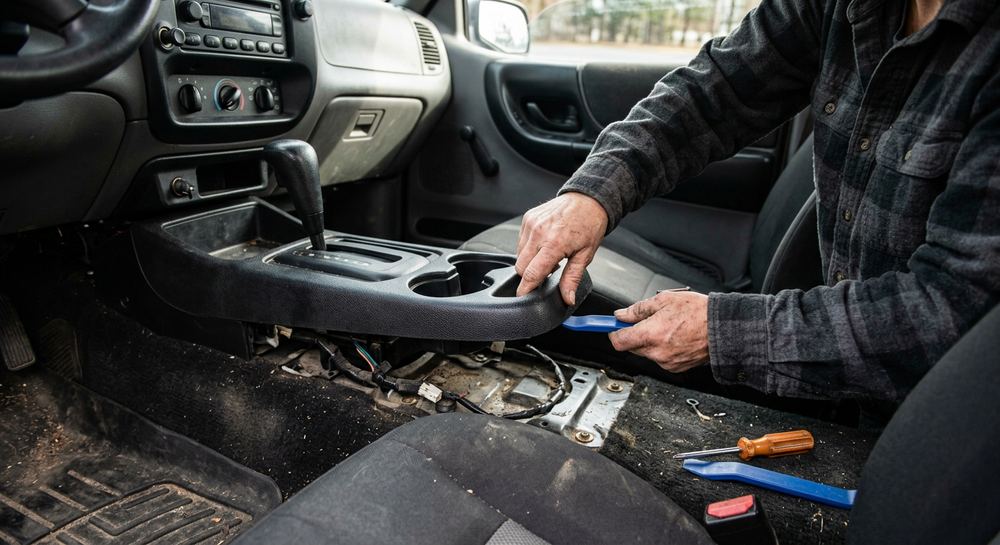
Tip: Do not turn the ignition on with the module unplugged. It can set additional codes and makes diagnosis more confusing later.
Packing and shipping tips
The module is durable but sensitive to static and impact. A little care goes a long way:
- Place it in an anti-static bag, or at least a clean sealed plastic bag.
- Use a small box with bubble wrap or foam so it cannot move around.
- Include a printed note with your name, return address, phone number, email, and order number.
- Use a shipping method with tracking so you always know where your part is.
What actually gets cleared
A proper reset is more than erasing a single code. A quality service will typically clear:
- Stored crash and deployment data
- Hard codes and soft codes in the module memory
- Event counters and lock flags that keep the light on
The module is then returned to its factory state, keeping the original VIN and configuration so it communicates with the rest of the vehicle normally.
Think of it like restoring the module to the day it left the factory, except it still knows exactly which car it belongs to.
After reinstallation
Once the module is back in, reconnect the battery and turn the ignition on. The airbag light should come on briefly for its self test and then switch off. If it stays on, it usually means another component still needs attention, such as a pretensioner, sensor, or clockspring. Scan the system again to see what remains.
Frequently asked questions
Is a reset module as safe as a new one?
When done properly, yes. The hardware is unchanged; only the stored crash data and codes are cleared, returning it to its original operating state. The module is not damaged by the crash itself in most cases.
Will I need programming after the reset?
Usually not. Because you are reinstalling your original module, it keeps its VIN coding and configuration. That is one of the biggest advantages over a new or used replacement.
Can every module be reset?
Most can, but there are exceptions, such as modules with physical damage like water intrusion or a cracked case. A reputable service will tell you up front if your part number is supported.
How long does the whole process take?
Most of the time is shipping. The reset itself is typically quick, and many services turn modules around within a day of receiving them.
Do I still need to replace deployed airbags?
Yes. Any airbag, pretensioner, or other pyrotechnic component that fired must be replaced. The reset only clears the module so the system can work with the new parts.
The bottom line
If your airbag light is stuck on after an accident, do not jump straight to buying a new module. Scan the system, replace anything that actually deployed, and look into resetting your original module. For most drivers it is the fastest, most affordable way to get a fully working restraint system and a clean dashboard again.